

HR & People Teams
Spot retention risk before it becomes a resignation.
Turn feedback trends into an early warning system—see which employees show signs of disengagement, then build a plan with their manager before it's too late.
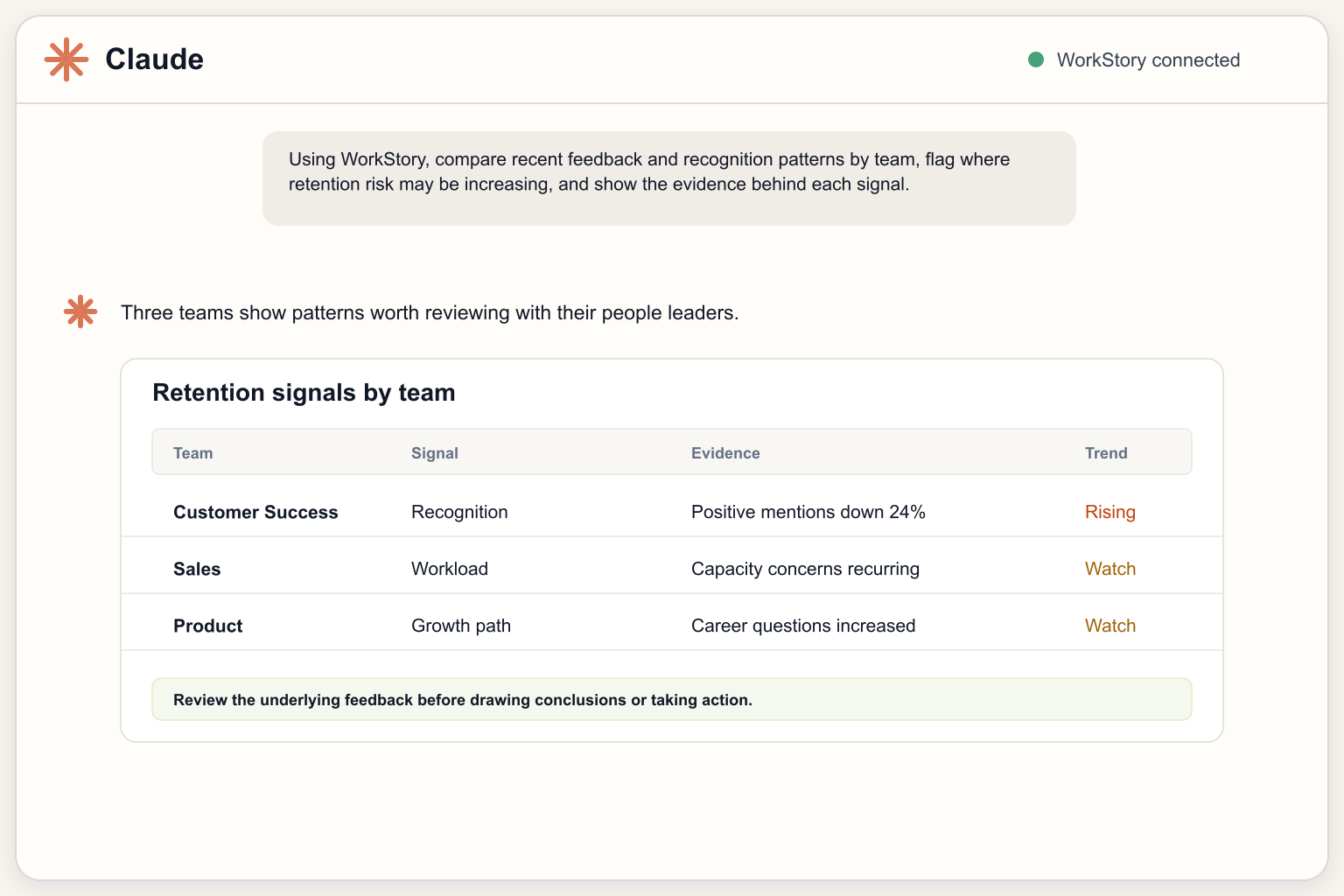
Using WorkStory, identify employees showing early signs of disengagement across the org and recommend where to focus retention conversations first.
Connect WorkStory to your AI workspace.
Choose the AI workspace your team already uses. Setup guides for Claude, ChatGPT and Codex, Gemini, and Microsoft Copilot are available now.

Claude
Connect WorkStory, enable it for a chat, and start asking questions.

ChatGPT + Codex
Connect WorkStory and start asking questions in ChatGPT or Codex.

Gemini
Connect WorkStory in Gemini and ask in plain language.

Microsoft Copilot
Connect WorkStory to Microsoft 365 Copilot or GitHub Copilot.
Turn early signals into a retention plan.
Take this use case further by turning flagged retention risks into a leadership-ready report with recommended interventions and clear owners.
Watch for the signal
Decide whether you're screening the whole org for risk or checking in on one employee you're already concerned about.
Ask for the pattern
Use recent WorkStory feedback to surface declining sentiment, recurring themes, and how the trend compares to the prior period.
Plan the intervention
Turn the findings into a retention conversation plan with the employee's manager, one clear action, and a date to check back in.
Now turn this into a retention risk report for leadership. Build a one-page summary for each flagged employee with the warning signs, contributing factors, and a recommended action. Add an executive summary of retention risk by department.
Related use cases
Explore what else you can ask WorkStory.
Browse practical examples for HR, managers, and employees—each built around a focused question and a useful next step.
AI only sees what each person is allowed to see.
WorkStory MCP uses the authenticated user’s company account and existing WorkStory permissions. Asking through an AI tool does not grant access to any additional employee data.
A few useful answers.
What is an MCP?
Model Context Protocol is a standard way for AI applications to connect to external tools and data sources. WorkStory MCP gives supported AI tools a governed way to request WorkStory performance context.
Which AI tools can teams use?
WorkStory MCP is intended for MCP-compatible AI clients, including ChatGPT and Claude environments that support MCP connections. Availability and setup can vary by plan and workspace.
Can the AI see everyone’s performance data?
No. Access is tied to the authenticated user’s company and existing WorkStory access rules. The MCP does not grant broader access simply because a question is asked through AI.
Can it create presentations and documents?
WorkStory MCP provides the relevant performance context. If your AI workspace has document or presentation tools connected, you can ask it to use those findings to create the deliverable.
What kinds of WorkStory data can it use?
Depending on the user’s access, it can help work with feedback history, people and account details, review cycles, and performance review information such as scores, comments, submissions, and status.
How do we get started?
Schedule a walkthrough. We will show your team representative use cases, discuss access and setup, and help identify the first high-value workflows for your organization.
See what your team can do
Use AI to turn your team's performance data into action.
Schedule a walkthrough tailored to your goals, tools, and permissions.
Schedule a walkthrough →Already a WorkStory customer? Ask your account manager.

© 2026 WorkStory. All rights reserved.
